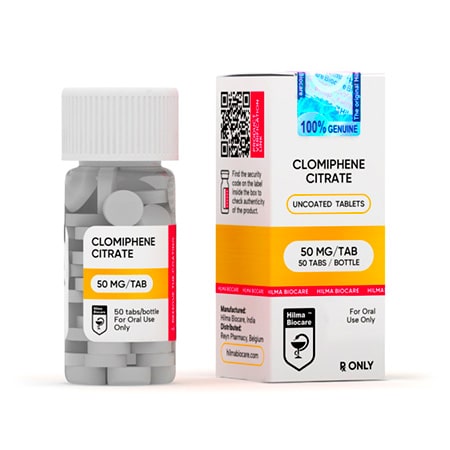
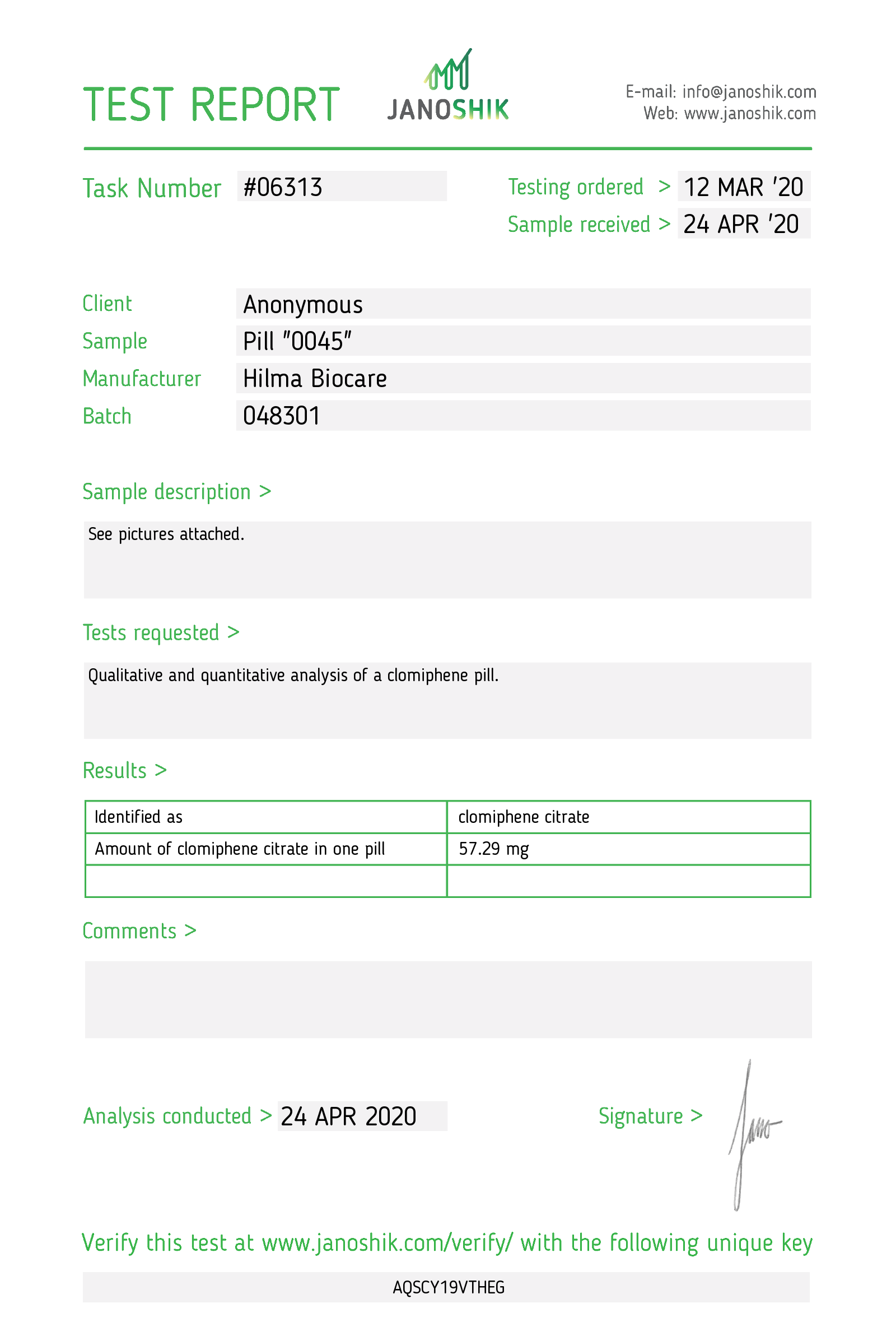
Clomiphene Citrate (Clomid) is a Selective Estrogen Receptor Modulator (SERM) primarily used to treat ovulatory dysfunction in women, such as polycystic ovary syndrome (PCOS). In the context of performance enhancement, it is commonly used by athletes and bodybuilders as part of Post Cycle Therapy (PCT) to stimulate natural testosterone production following anabolic steroid cycles.
Clomiphene works by blocking estrogen receptors in the hypothalamus, thereby reducing the negative feedback loop caused by elevated estrogen levels. This triggers the hypothalamus to release more gonadotropin-releasing hormone (Gn RH), which in turn stimulates the pituitary gland to produce luteinizing hormone (LH) and follicle-stimulating hormone (FSH), essential for testosterone production.
CLOMIPHENE CITRATE PROFILE
Anabolic Components: Low
Androgenic Component: Not applicable
Water Retention: None
High Blood Pressure: Rare
Aromatization: None
Liver Toxicity: Low, rarely reported
Half-Life: 5-7 days (some reports suggest up to 14 days)
EFFECTS
Clomiphene Citrate is used to manage the effects of elevated estrogen and stimulate natural testosterone production:
Blocks Estrogen Effects: Helps prevent estrogen-related side effects like gynecomastia during steroid cycles.
Stimulates Gonadotropins: Promotes LH and FSH production to restore endogenous testosterone levels.
Post Cycle Recovery: Essential for minimizing hormonal crashes and preserving muscle gains after anabolic steroid use.
Medical Uses: Treats ovulatory dysfunction and PCOS in women by triggering ovulation.
DOSAGE RANGE & CYCLE DURATION
Typical Duration: 1 to 6 weeks (as part of PCT).
Mild Dosage (Men): 25 mg/day.
Average Dosage (Men): 50–100 mg/day.
High Dosage (Men): 100–150 mg/day (first 1–2 weeks of PCT).
Women: Not recommended for non-medical purposes due to potential adverse effects.
SIDE EFFECTS
Clomiphene Citrate is generally well-tolerated, but some side effects can occur:
Allergic Reactions:
Difficulty breathing.
Tightness in the chest.
Swelling of the mouth, face, lips, or tongue.
Rash, hives, or itching.
Other Side Effects:
Common: Nausea, vomiting, diarrhea, breast tenderness, headaches, flushing.
Rare: Visual disturbances, mood changes, abnormal uterine bleeding (women).
Long-Term Use: Risk of ovarian hyperstimulation syndrome in women (not relevant for men).
STORAGE
Store in a dry place, away from light.
Maintain a temperature range of 15–25°C (59–77°F).
Keep out of reach of children.
MIXING/COMBINING OPTIONS
Clomiphene Citrate is versatile and can be effectively combined with other compounds during PCT or maintenance cycles:
With Human Chorionic Gonadotropin (HCG):
Use HCG to stimulate the testes directly, followed by Clomid to maintain and sustain testosterone production.
During a Steroid Cycle:
Low doses of Clomid can serve as an anti-estrogen to mitigate estrogen-related side effects like gynecomastia.
PCT EXAMPLE USING CLOMIPHENE CITRATE
Duration: 4–6 weeks post-cycle
Week 1–2:
Clomid: 100 mg/day
Optional HCG: 1,500–3,000 IU every 3–4 days
Week 3–4:
Clomid: 50 mg/day
Week 5–6:
Clomid: 25 mg/day (taper off to ensure natural hormonal balance).
KEY POINTS FOR SAFE USE
PCT Planning: Always include Clomid as part of a well-designed PCT plan to prevent hormonal crashes.
Stack with HCG: Use HCG in the initial weeks of PCT to jumpstart testicular function before switching to Clomid for long-term recovery.
Avoid Overuse: Prolonged use or excessive dosages can lead to unwanted side effects such as mood disturbances or vision issues.
Monitor Side Effects: Report allergic reactions or persistent adverse effects to a healthcare provider.